
The Olmec colossal heads
Gliese Bimonthly Vol. 3, covering the Olmec civilization and their unique sculptured stone heads.

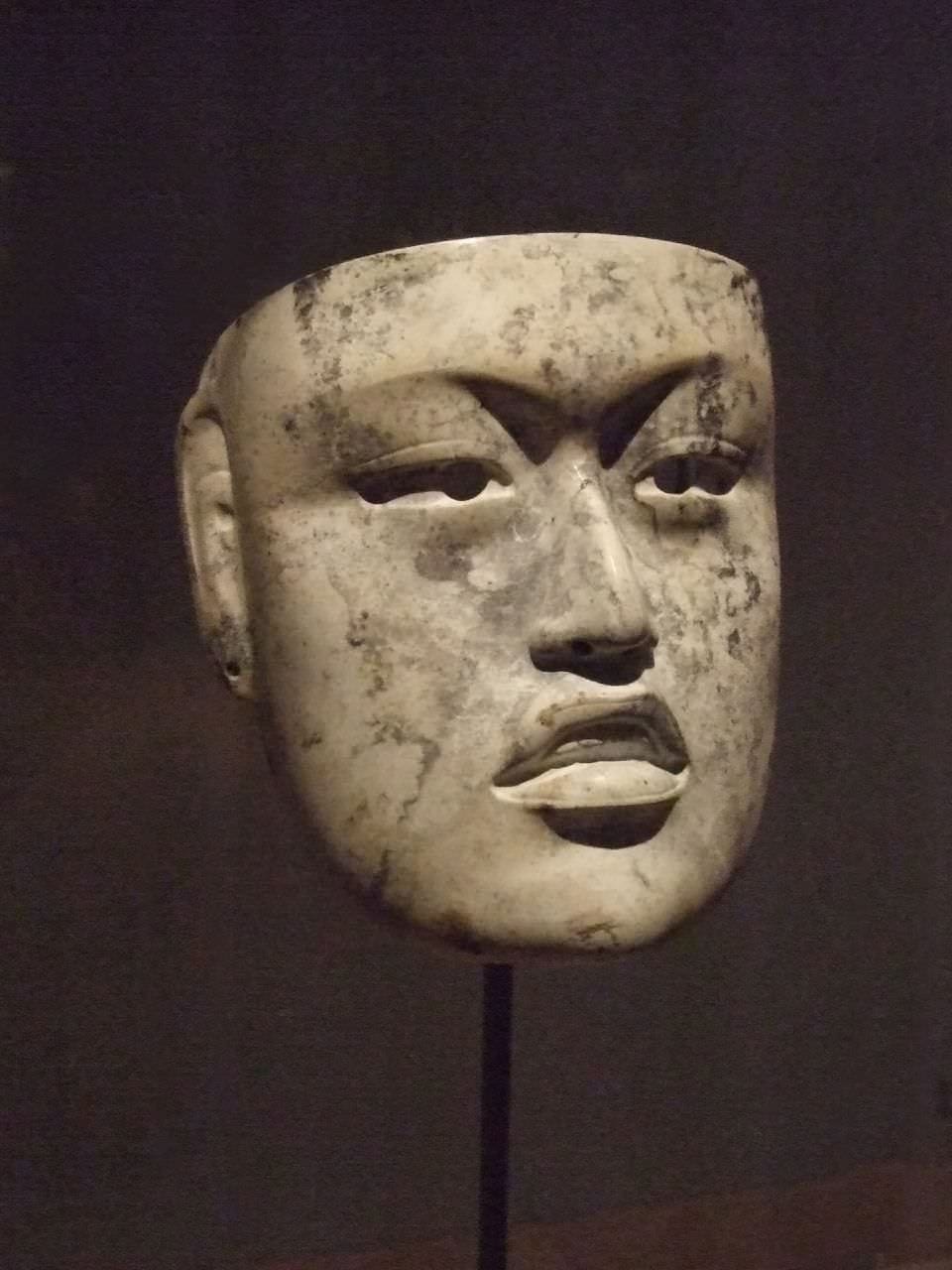
The Olmecs were one of the earliest complex societies in Mesoamerica, thriving between approximately 1600 and 400 BCE along the Gulf Coast of present-day Mexico, particularly in the regions of modern-day Veracruz and Tabasco. Often regarded as the "mother culture" of Mesoamerica, the Olmecs influenced later civilizations such as the Maya, Zapotec, and Aztec. They utilized a glyph writing system and established large ceremonial centers, including San Lorenzo, La Venta, and Tres Zapotes, which featured monumental architecture and art. The Olmecs developed a sophisticated social and political organization, supported by agricultural advances like the cultivation of maize. Their religious beliefs were deeply tied to nature and featured deities associated with elements like rain, fertility, and the underworld. The Olmecs are best known for their artistic contributions, including colossal heads, jade figurines, and intricate carvings, which reflect their complex cosmology and hierarchical society. Perhaps the most notable testament to their artistic capabilities is their giant, colossal stone heads.
Olmec stone heads
The Olmec colossal heads, produced between approximately 1200 and 400 BCE, are among the most significant artifacts of ancient Mesoamerican art. These sculptures, carved from basalt, range from 5 to 11 feet in height and can weigh up to 50 tons. They are generally interpreted as representations of Olmec rulers; however, the exact purpose of these heads is unknown. Since many were removed or displaced, it is difficult to pinpoint their exact dating. It was not until 1862 that these heads were discovered again, and not until 1938 when the first archaeological investigations of Olmec culture occurred.
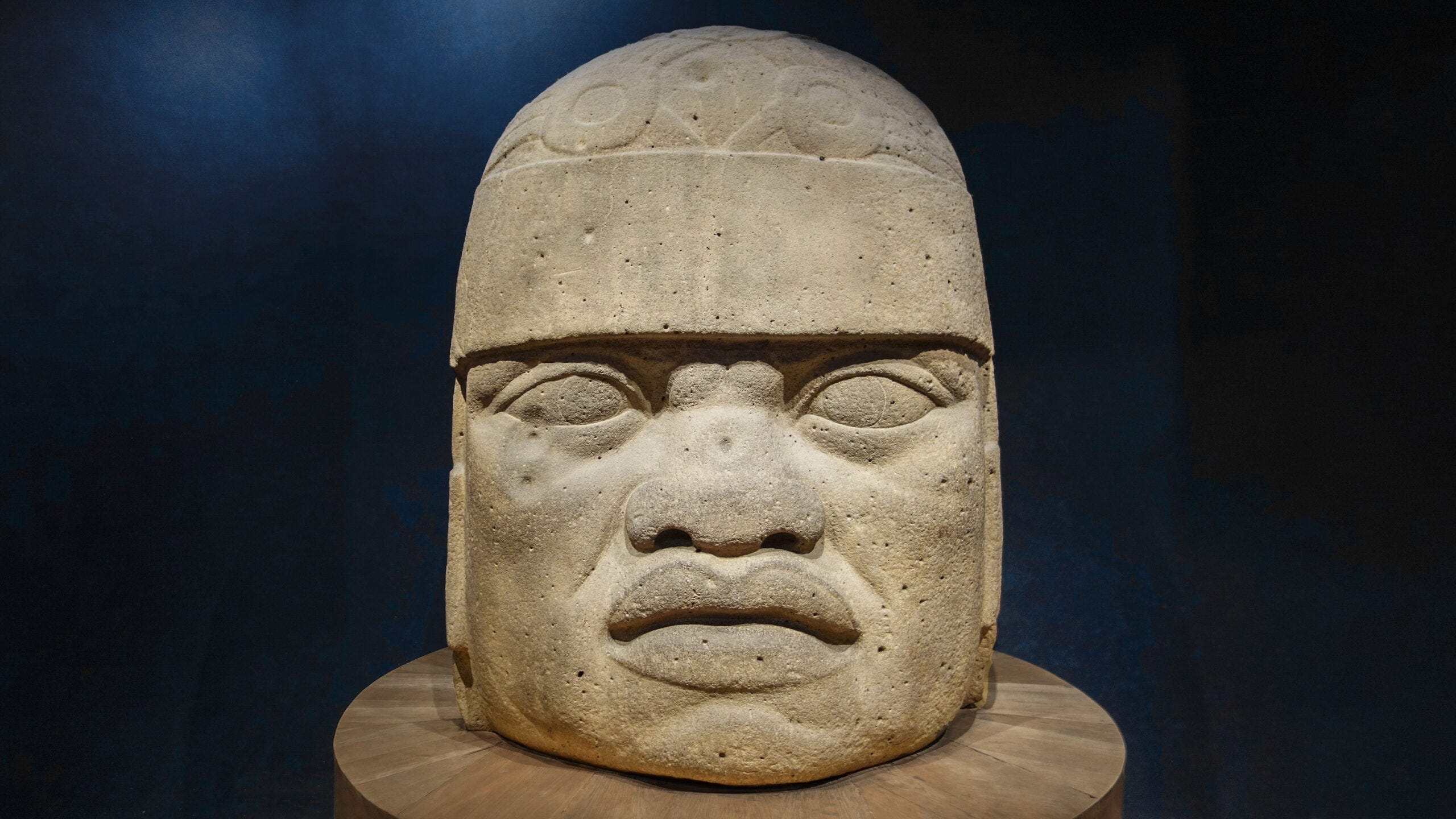
The basalt used for these heads was sourced from quarries in the Tuxtla Mountains, located up to 60 miles from the sites where the sculptures were eventually placed. The transportation of these massive stones would have required advanced logistical coordination and significant labor, possibly involving wooden rollers, sleds, and river rafts.
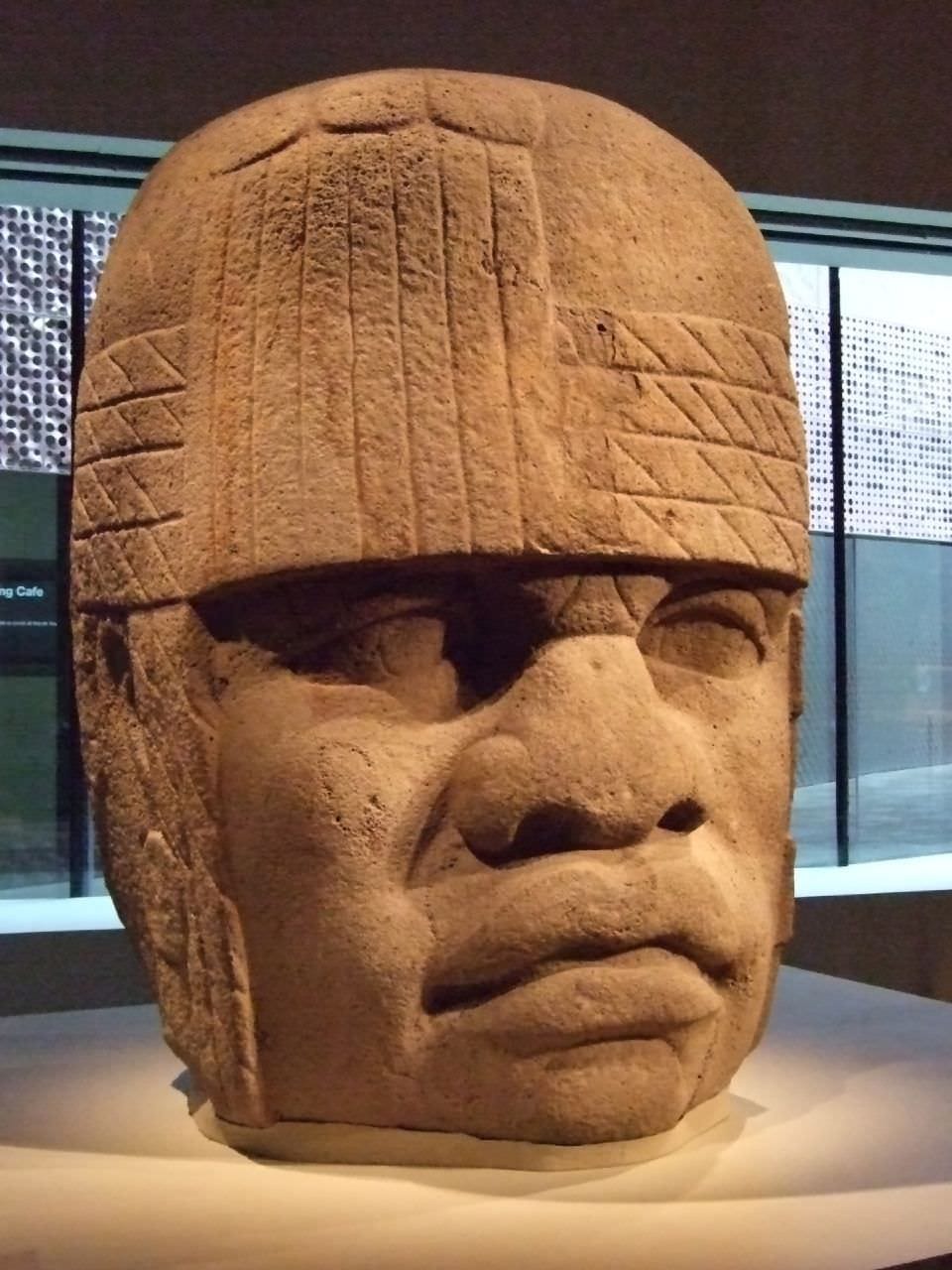
A notable feature of the colossal heads is the helmet-like headdresses, often adorned with carved designs. These headdresses may denote elite status and could be associated with rulership, military leadership, or participation in ceremonial activities such as the Mesoamerican ballgame. The ballgame held significant cultural and religious importance, symbolizing cosmic events or serving as part of ritual practices, and the association of the headdresses with this activity has been widely proposed.
The colossal heads are thought to have functioned as political and ceremonial symbols, commemorating rulers and asserting their authority. Their monumental scale and prominent placement in plazas or ceremonial centers suggest they were intended to convey power and reinforce social hierarchies. The heads’ visibility in public or ritual spaces would have amplified their symbolic significance, connecting the depicted individuals with political control or divine.
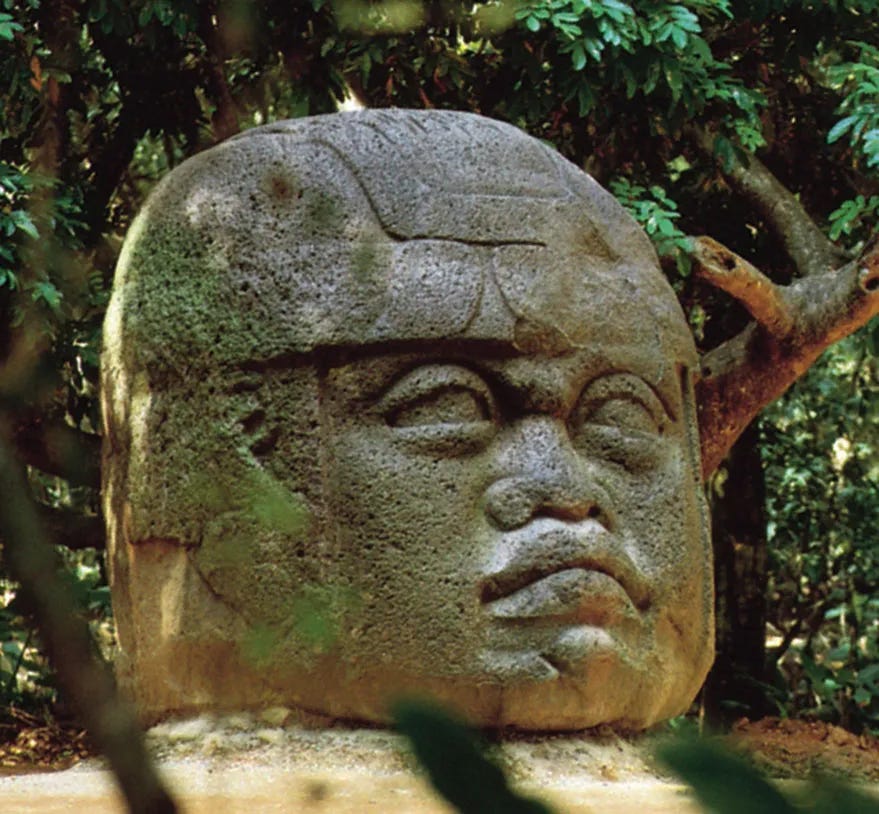
As some of the earliest examples of monumental art in Mesoamerica, these colossal heads hold a central place in the study of ancient Mesoamerican cultures as a fascinating example of ancient and indigenous art in the region, predating the Aztec Empire.
Further reading
Colossal Heads of the Olmec Culture
Giant Olmec heads getting attention in Chicago’s suburbs
The Cobata colossal head: an unfinished Olmec monument?
The Dawn of Olmec Civilization (video)
More from GAC
We’re an art collective: outside of our Substack, we publish free zines about non-Eurocentric art history. For our December 2024 issue, we just published three, covering a wide range of topics. Here is a description of each:
Indigenous Art of Siberia: zine - This zine explores the art of Indigenous peoples in Siberia, from traditional clothing to modern bands embracing unique Indigenous culture.
Solarpunk: an introductory zine - This zine explains a basic intro to the genre and ideology of solarpunk, embracing a bright, green vision for the future.
Amrita Sher-Gil: Female Subjectivity in Indian Modernism - This zine explores the themes and visions of the Indian-Hungarian artist Amrita Sher-Gil.
Click here to access printables of each, on our website!
Written by Amenah Rashid